
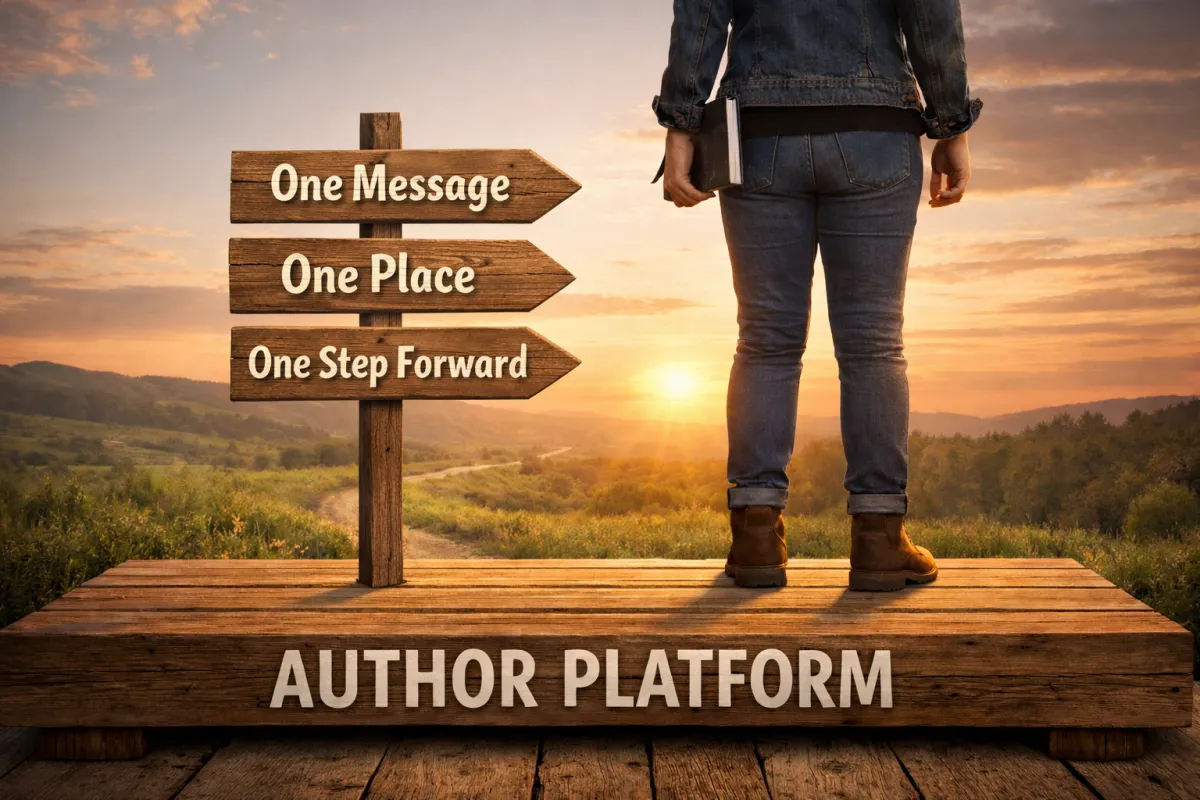
What Every Author Needs to Build a Strong Platform (Without Overwhelm)
Many authors hear the same advice: “You need to build an author platform.”
But instead of clarity, it often creates confusion.
Where do you start?
What actually matters?
And do you really need to be everywhere?
Here’s the truth: You don’t need more noise—you need direction.
What an Author Platform Really Is
An author platform is not about:
Going viral
Having thousands of followers
Being on every social media channel
It’s about three simple things:
Visibility – people can find you
Connection – people relate to you
Trust – people believe your message matters
When those three things work together, your platform becomes a natural extension of your writing.
Where Should You Show Up?
Instead of trying to be everywhere, choose one primary place to start:
Facebook → great for community, conversation, and relationship-building
LinkedIn → ideal for professionals, speakers, and authority-based authors
Pinterest → strong for visual discovery, blog traffic, and long-term reach
Email → your most valuable connection (you own it—not an algorithm)
If you missed it, I walk through this more in: Do Authors Really Need a Newsletter?
The goal isn’t to master everything. It’s to show up consistently in one place.
What You Actually Need (Keep It Simple)
1. A Clear Message
Who are you writing for?
What do they need?
This connects directly to your purpose. Writing with Purpose: Trusting God with Your Story
2. A Simple Website
You don’t need anything complicated. A simple author website should include:
A short bio
A blog or content hub
Contact information
A way to collect emails
A place to showcase or sell your books
If you're just starting, a simple Square store site can function as your website.
Here are a couple of simple author site examples:
https://janefriedman.com (clean, content-focused)
https://sethgodin.com (minimal, blog-first approach)
Notice:
Clear message
Easy navigation
No overwhelm
3. A Way to Stay Connected
Your email list is one of your greatest assets.
Social media can change. Platforms can disappear,
But your email list? That’s yours.
4. A Repeatable Plan (This Is the Game-Changer)
Instead of chasing everything, build a rhythm. A simple, repeatable plan might look like this:
Prayer. Invite God into your writing and direction
Learning. Study your craft and the publishing industry
Connection. Build relationships with:
other authors
speakers
your ideal readers
Continued Growth. Invest in:
conferences
critique groups
online classes
Writing. Show up and write—even when it’s not perfect
Editing. Refine your message.
Submitting / Sharing. Get your work into the world
Know Your Reader
Continue learning:
what they need
what they’re walking through
how your message serves them
This isn’t complicated. It’s consistent. And consistency builds confidence.
What NOT to Do
❌ Try to be everywhere
❌ Compare your beginning to someone else’s middle
❌ Wait until everything is perfect
Your platform grows as you go.
Final Thought
You don’t need to build everything at once.
Start with:
One message
One place
One step forward
And trust that God will use your obedience.
"For such a time as this." Esther 4:14
Waypoint Challenge
Choose ONE step this week:
Define your reader
Choose your primary platform
Update your website
Reach out to another author
Then take action.
Which part of building your author platform feels most overwhelming right now?
Coming Next on the Authorpreneur Compass
Let’s keep moving forward:
What to Do When You Feel Stuck as a Writer
Simple Book Marketing Strategies That Actually Work for New Authors
How to Build Your Author Platform from Scratch (Step-by-Step)
And don’t miss the Authorpreneur Compass Map—your guide to navigating the business side of writing step-by-step.
Explore More Author Business Guides
Related Resource
Need a clearer next step for your author journey? Explore DeeDee Lake’s Author Resources for practical tools, encouragement, and guidance for the business side of writing.
Explore Author Resources:https://deedeelake.com/author-resources